Muni University has successfully concluded its Second Annual Research and Dissemination Conference, bringing together researchers, academics and other participants from across Uganda and beyond to share scientific knowledge, showcase innovations and explore ways of translating research into practical solutions for sustainable development.
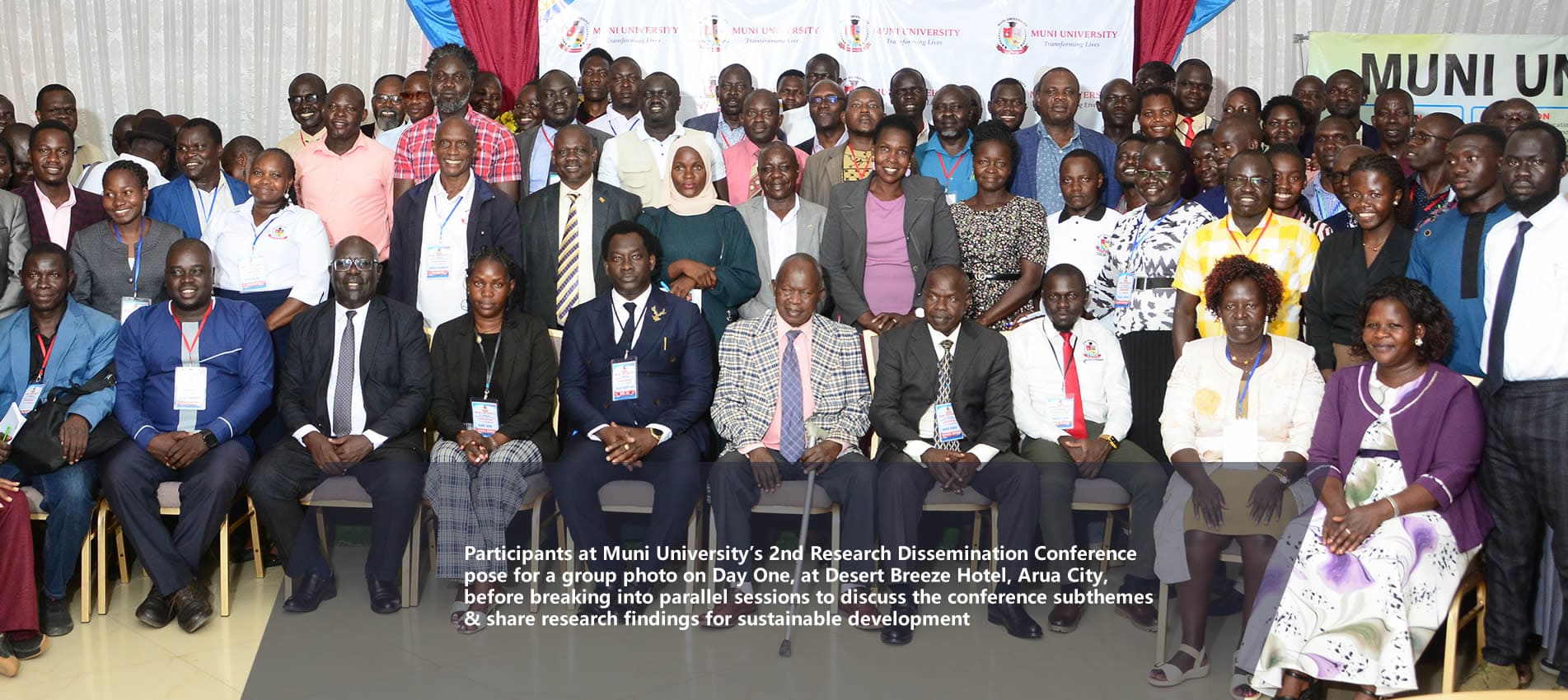
Held on 14–15 October 2026 at Desert Breeze Hotel in Arua City, the conference attracted 262 papers, from which 85 were selected for presentation by the University’s Scientific Committee. The event featured keynote addresses, scientific presentations and discussions across several research sub-themes, culminating in awards recognising outstanding presenters.
Uganda urged to increase investment in research
Delivering the first day’s keynote address virtually, Prof. Anthony Egeru highlighted the importance of investing in research and innovation as drivers of national development.
In his presentation, Building a Culture of Research and Innovation Excellence in Emerging Universities: From Knowledge Generation to Sustainable Development Impact, Prof. Egeru revealed that Uganda invests approximately 0.14 per cent of its resources in research, calling for greater commitment to research financing.
“Research is one of the best investments we can make as a country. Research is not a cost,” he emphasised.
He challenged emerging universities to cultivate a strong research culture that goes beyond generating academic knowledge to delivering measurable benefits to communities and contributing to national development.
Research institutions urged to build sustainable programmes
On the second day, Prof. Richard Edema, Director of the Makerere University Regional Centre for Crop Improvement (MaRCCI), challenged researchers to move beyond isolated projects and develop sustainable research programmes, collaborative teams and Centres of Excellence.
He emphasised the importance of building institutional research platforms, identifying common themes among existing projects and developing partnerships with the private sector to support commercialisation.
“Build research platforms; move from project level through programme level to Centre level,” Prof. Edema advised, urging researchers to audit existing projects to identify natural thematic areas that could support larger, coordinated research programmes.
He further underscored the need for corporate partnerships to transform research outputs into market-ready products and services, as well as opportunities for licensing revenue.
Prof. Edema challenged researchers to focus not only on conducting research but also on its potential to improve people's lives.
“It is not just about doing research, but what can change the lives of the Wanaichi,” he said.
His presentation reinforced the importance of linking scientific research to practical challenges, industry needs and community development.
University Council outlines ambitious development agenda
Representing the Chairperson of the University Council at the official opening, the Vice Chairperson, Dr. Moses Kibirai, highlighted the University's strategic direction and the role of Council and Management in guiding its growth.
He said the University had developed an ambitious strategic plan intended to position Muni University as a centre of excellence, including through investments in health-related infrastructure and specialised services.
Dr. Kibirai cited plans involving a Cancer Institute, a Heart Institute and other specialised facilities, alongside the University's broader development ambitions.
He noted that the strategic plan reflects the institution's commitment to strengthening its contribution to national development.
Opening the conference on behalf of the Vice Chancellor, the Deputy Vice Chancellor for Academic Affairs, Prof. Jacob Godfrey Agea, welcomed participants and commended them for contributing to the advancement of research.
“Your participation demonstrates our collective commitment to advancing research. I encourage all of you to engage actively in the scientific presentations,” he said.
His remarks set the tone for two days of scientific exchange, knowledge sharing and discussion on how research can address development challenges.
Outstanding researchers recognised
The conference concluded with awards recognising outstanding research presentations across six sub-themes, with Assoc. Prof. Zami Atibuni emerging as the Overall Best Presenter.
The awardees were:
- Education and Human Development: Assoc. Prof. Zami Atibuni, who also received the Overall Best Presenter award.
- Emerging Technologies and Digital Innovations: Dr. Mshilla Mghanga.
- Basic and Applied Sciences: Dr. Betty Akwongo.
- Health, Medicine and Well-being: Assoc. Prof. Morgan Andama.
- Leadership, Governance and Business: Mr. Akena Oyo.
- Agriculture, Environment and Natural Resource Management: Dr. Cyprian Osinde.
The awards recognised the researchers' presentations and contributions to the conference's scientific discussions.
Strong response to call for research dissemination
According to the Chairperson of the Organising Committee, Prof. Robert Kajobe, the conference attracted more than 262 papers, demonstrating considerable interest in the University's research dissemination initiative.
The Chairperson of Muni University's Scientific Committee, Prof. Jonathan Izudi, led the selection of the 85 abstracts accepted for presentation.
The conference provided a platform for researchers to share findings, receive feedback from peers and explore opportunities for collaboration across disciplines.
As the event concluded, the discussions highlighted the importance of sustained investment in research, stronger institutional research programmes and closer partnerships between universities, industry and communities.
For Muni University, the conference reaffirmed the role of research and innovation in advancing its mandate to generate knowledge, develop solutions to societal challenges and contribute to sustainable development in West Nile and beyond.